

How to Photograph Red Squirrels in Scotland | Best Locations & Tips
Scotland is a wildlife photographer’s dream, and red squirrels are among its most iconic subjects. With their tufted ears, vibrant coats, and playful nature, capturing these elusive creatures requires skill, patience, and the right approach. This guide covers everything you need to know—from the best locations to camera settings and ethical practices.
Around 75–80% of the UK’s red squirrel population lives in Scotland, mainly in coniferous and mixed woodlands. This makes Scotland one of the last safe havens for this species in Britain. Unlike many small mammals, red squirrels stay active year-round. They store nuts and seeds in hidden caches to survive the winter when food is scarce. Despite the name, their coat colour varies from rusty red to dark brown, and even blonde or black. In winter, it often fades to a greyish tone. Red Squirrels have tufted ears which are a classic feature, but they can disappear during moulting in late summer and grow back later. By forgetting some of their buried food stores, red squirrels unintentionally help regenerate forests, as those seeds grow into new trees. Red squirrels are expert climbers and can leap between trees with ease. They spend most of their lives in the canopy, rarely coming to the ground unless necessary. Their biggest threats are grey squirrels, which outcompete them for food and spread squirrelpox (fatal to reds). Habitat loss also plays a role. Conservation projects like *Saving Scotland’s Red Squirrels* work hard to protect them. They can live up to 6 years in the wild and start breeding within their first year. Females may have two litters annually, each with 2–6 kittens.
Why Photograph Red Squirrels in Scotland?
Scotland is home to around 75% of the UK’s red squirrel population, thanks to its ancient pine forests and conservation efforts. These woodlands provide stunning natural backdrops for wildlife photography, making Scotland the perfect destination for capturing these charismatic animals. Some of the backdrops and locations can be breathtaking providing the perfect setting. Seeing and photographing Red Squirrels without using a hide can be challenging, even in Scotland and sometimes the only sightings you have will be a squirrel running across a remote road or footpath. However there are many purpose built hides in Scotland that make this so much easier.
Best Locations for Red Squirrel Photography
Cairngorms National Park – Aviemore and Nethy Bridge are hotspots, with hides run by experts like Neil McIntyre.
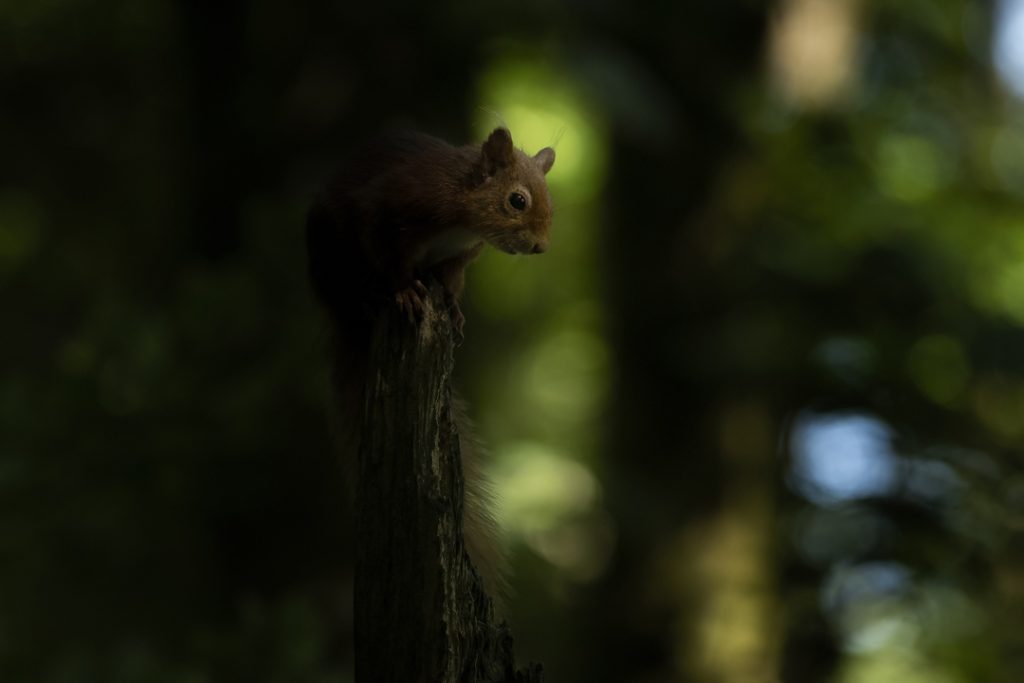
Argaty Red Kites (Doune) – One of the best locations that I use, set in a shaded open area of forest on a bright sunny day the dappled light shining through the trees is spectacular.
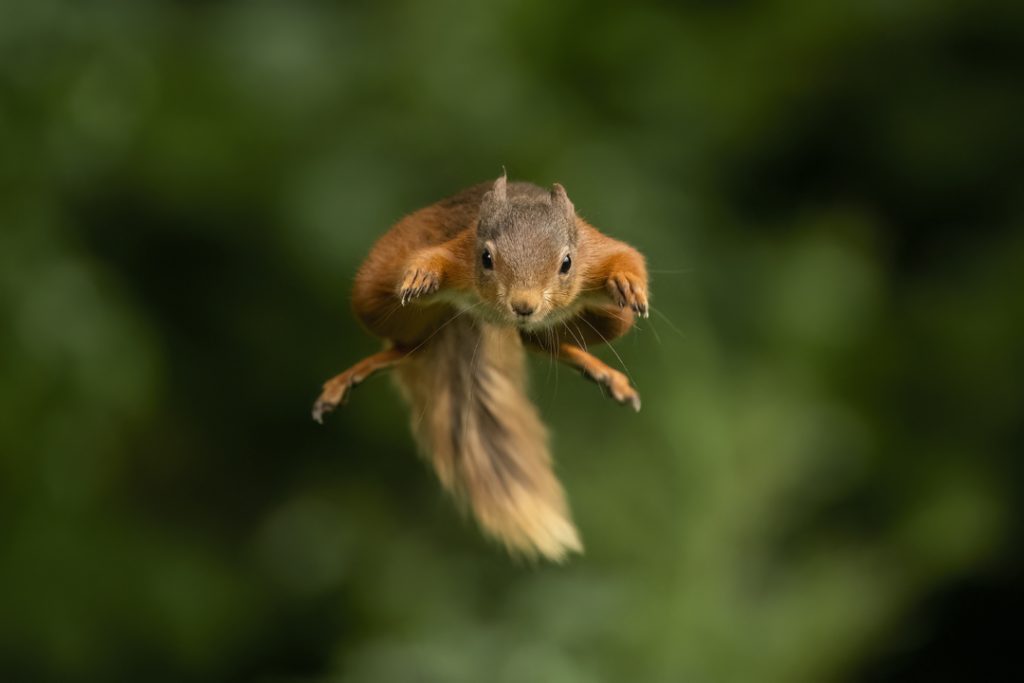
Dumfries & Galloway – Scottish Photography Hides offer eye-level perspectives and controlled setups including a great jumping set up where you can achieve images of the squirrels jumping straight at you.
Other strongholds – Glen Affric, Queen Elizabeth Forest Park, Isle of Arran, and Culbin Forest.
When to Go
When is the best time o photograph Red Squirrels?
- Early morning or late afternoon for peak activity.
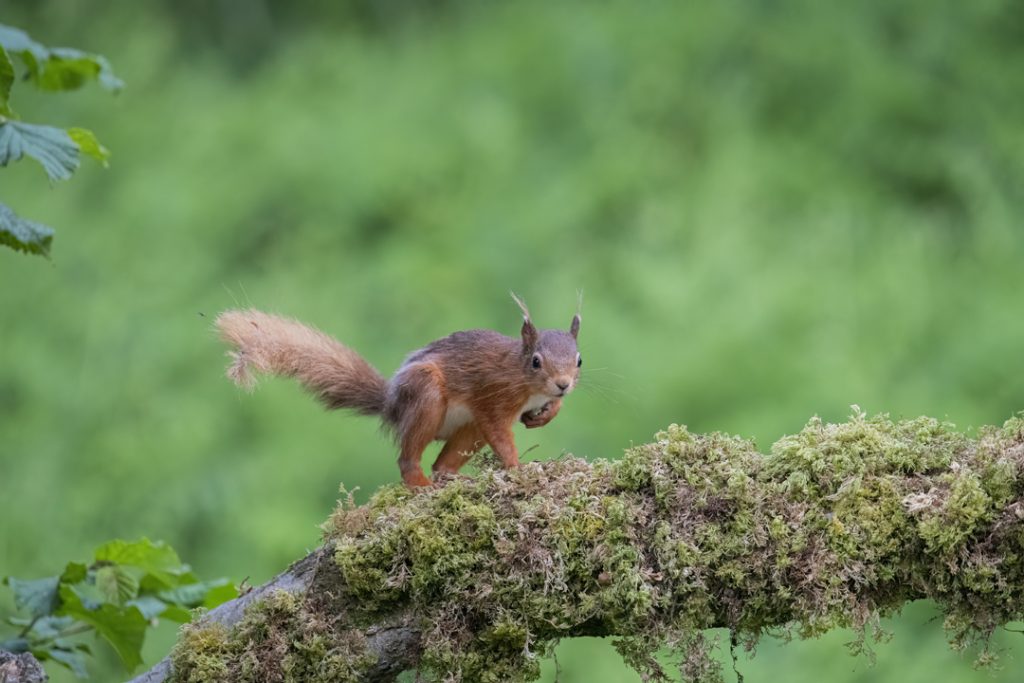
- Winter for thick coats and tufted ears against snowy or frosty backdrops.
- Autumn for vibrant foliage and warm tones.
- Summer for stronger sunlight and bright green backgrounds
- Spring for early flowers and splashes of colour – bluebells and daffodils.
Essential Gear
Camera: DSLR or mirrorless with fast burst mode. Good low light capability is also useful.
Lens: 200–600mm. This range will give you a great opportunity to capture wider images and close ups.
Support: Tripod or beanbag for stability. Some hides have mounts for tripod heads. Some don’t check in advance.
Extras: Waterproof covers for Scotland’s unpredictable weather.
Camera Settings
Mode: Aperture Priority, Shutter Priority or Manual – whatever you are comfortable with.
Aperture: f/4–f/5.6 for. Widest aperture (lowest number) for subject isolation and to make it stand out from the background.
Shutter Speed: 1/1000s or faster – squirrels move a lot and this is fast enough to freeze most motion. For jumping shots 1/1600s is ideal.
ISO: Set to Auto = for the everchanging woodland light
RAW Format: For maximum editing flexibility.
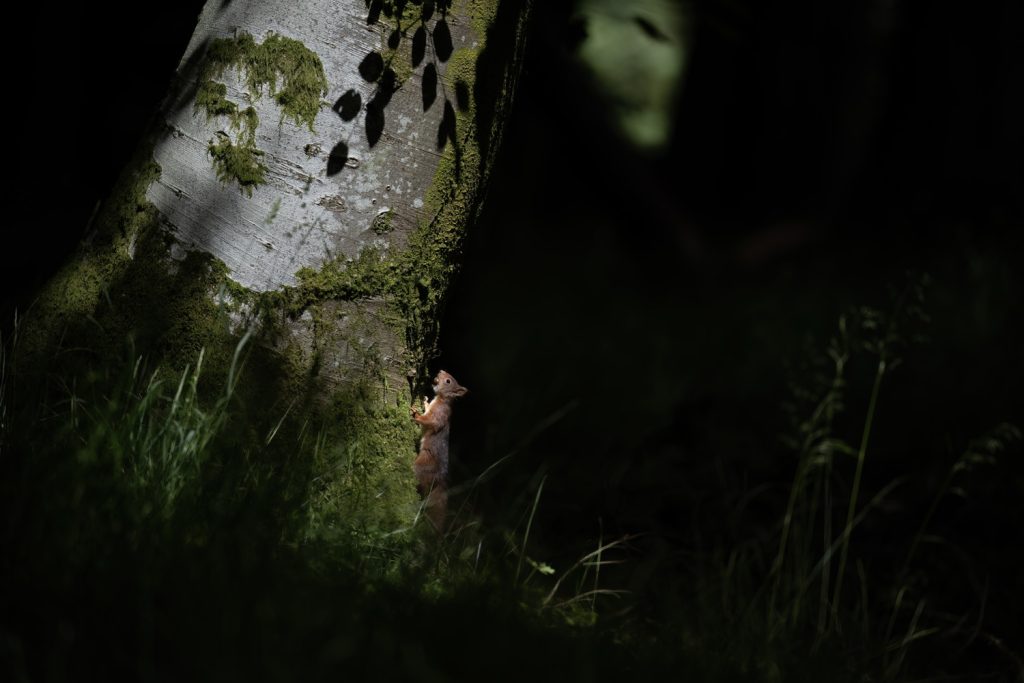
Exposure Compensation: +1 EV in snowy conditions. -2 or -3 to bring out the contrast of the shadows and highlights in dappled light.
Fieldcraft & Ethical Tips
In the forest when walking move slowly and stay quiet—red squirrels are easily spooked.
Use hides for eye-level shots and natural behaviour whilst minimising disturbance. Keep noise to a minimum and avoid quick lens movements. Avoid excessive baiting; use natural food sources sparingly – nuts and fruit.
Respect conservation rules and never disturb habitats.
Creative Techniques
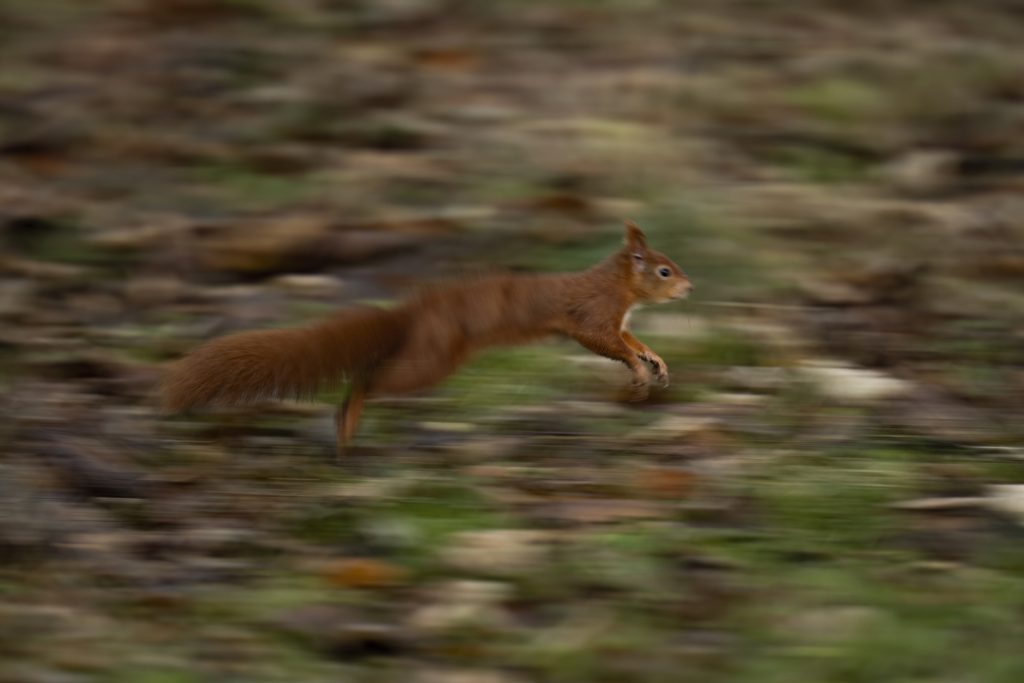
Action Shots: Continuous autofocus and burst mode for squirrels jumping and running
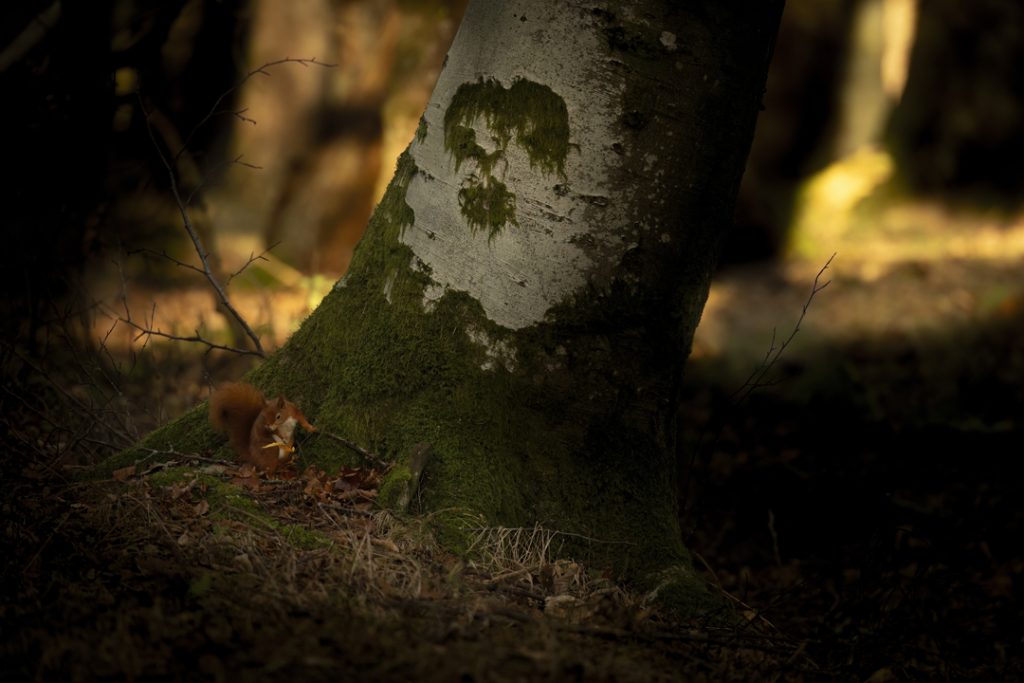
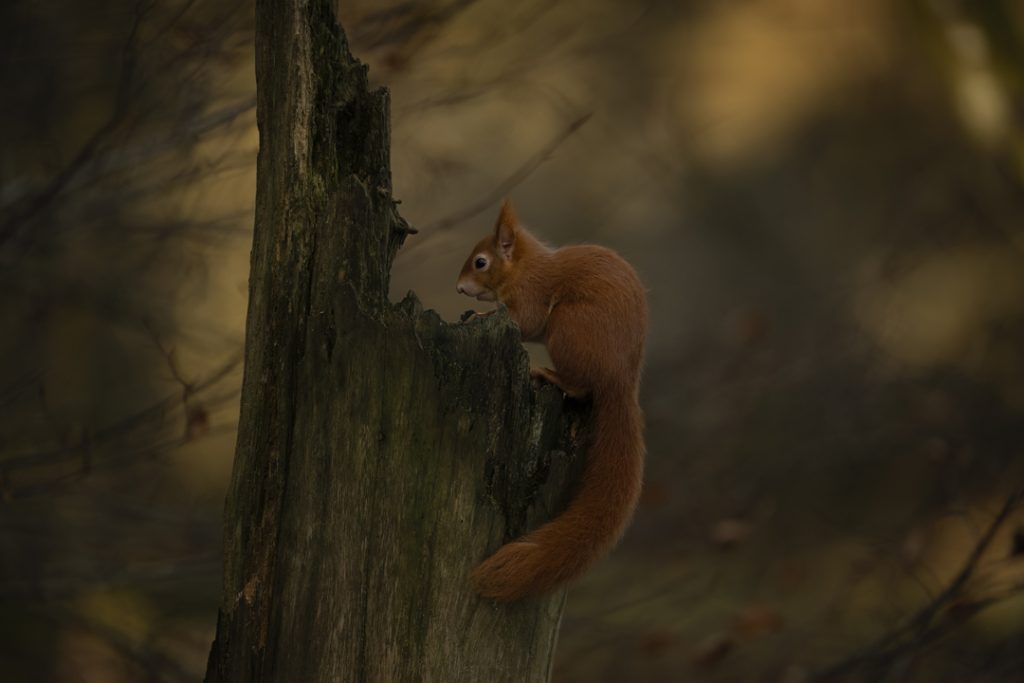
Environmental Portraits: Include woodland elements like pine cones and moss. Look for plants and flowers to add areas of interest.
Seasonal Themes: Snow scenes or autumn colours for dramatic compositions.
Pay attention to light and backgrounds. Look for interesting colours in the backgrounds and the way the light is hitting particular branches and areas of the forest.
Play around with shutter speeds – try panning shots of the squirrels running to show motion and movement.
Workshops & Guided Experiences
Some of the Red Squirrel Themed workshops that I offer
Argaty Red Kite and Red Squirrel Workshop – Learn exposure, light, composition, and animal behaviour. Photograph Red Squirrels in the morning and Red Kites in the afternoon. Ideal for people that want to take images of Red Squirrels that are creatively different.
Argaty Beginners Red Squirrel Workshop – Learn camera set up, exposure, composition, and animal behaviour. Ideal for people who want to learn the basics and capture eye-catching portraits of Red Squirrels
Scottish Photography Hides – Guided sessions for red squirrels and other species. The Red Squirrel Hide features on all of my workshops and can be booked as a one day workshop or as multiple days with additional species. Focus here is on action and jumping shots as well as creative portraits.
Keith Pine Marten Workshop – Although the workshop is centred around the Pine Martens there are several Red Squirrels that visit the hide and some very different Squirrel images can be captured here with different light.
Quick Checklist
Where: Cairngorms, Argaty, Dumfries & Galloway.
When: Early morning or late afternoon; winter for ear tufts, autumn for colour.
Gear: Telephoto lens, tripod, waterproof covers.
Settings: f/4–f/5.6, 1/1000s+, ISO AUTO
Ethics: Respect wildlife, avoid disturbance.
Red Squirrels are amongst the most challenging animals to photograph, but with a little practice and lots of patience you can be rewarded with some fantastic photographic opportunities. I have been photographing Red Squirrels now for over 10 years in a variety of different locations in Scotland and if you would like to learn more then get in touch or join me on a workshop.