
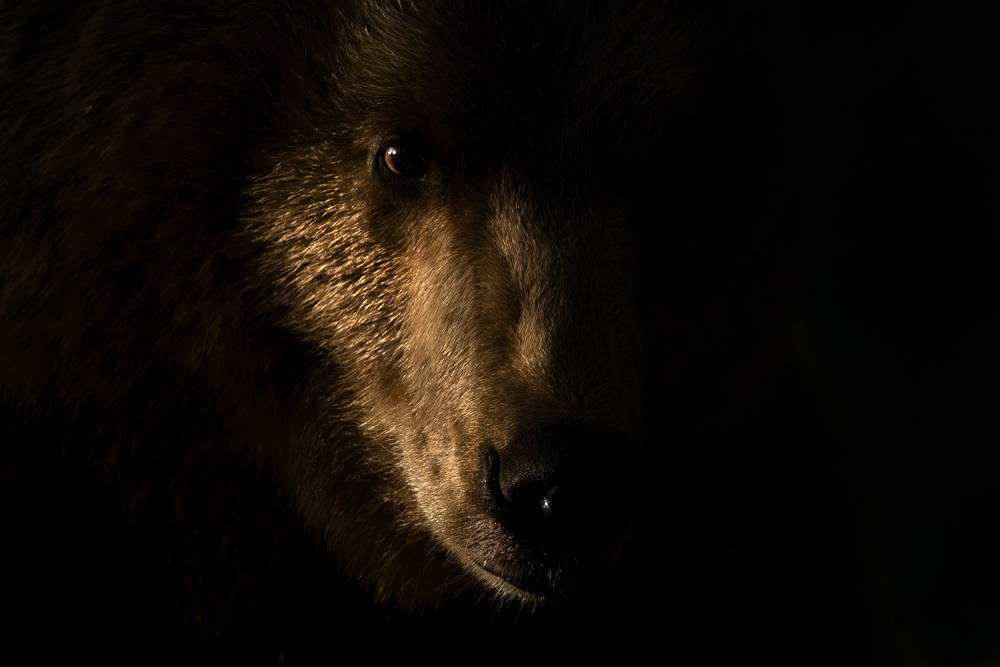
Photographing Brown Bears in Finland: The Ultimate Guide to Bear Photography at Martinselkonen and Boreal Wildlife Centre
Discover how to photograph wild brown bears in Finland’s legendary taiga wilderness, with expert advice on the best locations, seasons, equipment, and hide photography techniques.
Why Finland Is One of the Best Places in the World to Photograph Brown Bears
For wildlife photographers, few experiences compare to watching a wild brown bear emerge from the shadowy boreal forest under the golden light of a Finnish summer night. Finland has quietly established itself as one of Europe’s premier wildlife photography destinations, offering exceptional opportunities to photograph wild Eurasian brown bears (Ursus arctos) in pristine natural habitats.
The vast forests of eastern Finland, stretching along the Russian border, support a healthy population of brown bears living in one of Europe’s last great wilderness areas. Unlike many wildlife destinations where sightings can be unpredictable, Finland’s specialist photography hides provide reliable opportunities to observe and photograph bears behaving naturally in the wild.
Among the country’s most respected wildlife photography operators, two names consistently stand out:
- Martinselkonen Wilds Centre in Suomussalmi.
- Boreal Wildlife Centre in Kuhmo
Both offer unparalleled access to the Finnish taiga and some of the finest bear photography opportunities available anywhere in Europe.
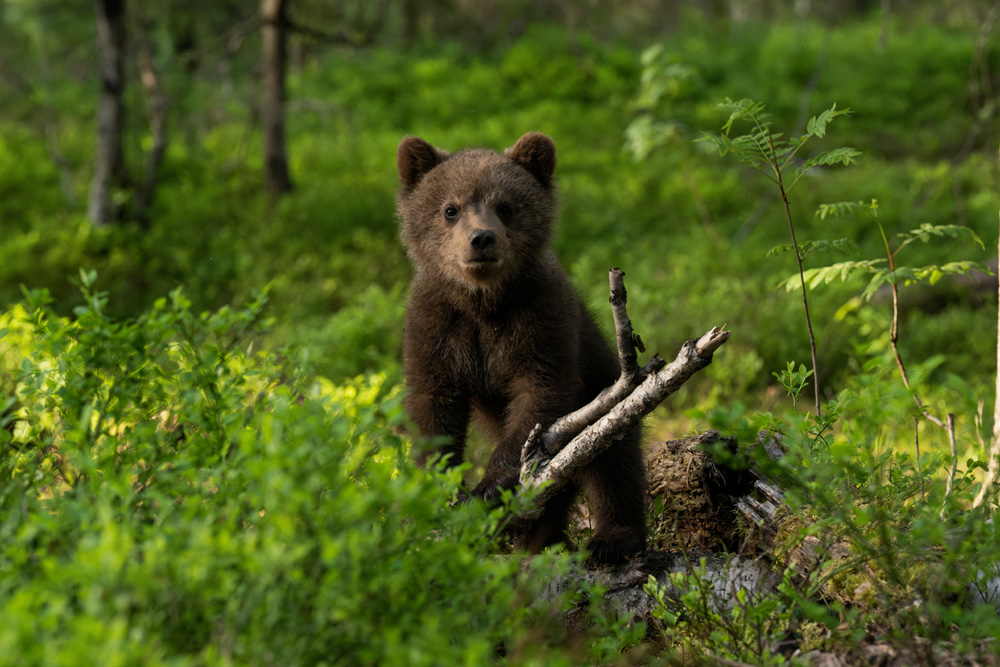
Martinselkonen: Finland’s Iconic Bear Photography Destination
The Martinselkonen Wilds Centre, located in the remote Kainuu region near Finland’s eastern border, has been organizing bear watching and photography safaris since 1995. With decades of experience, it has developed a reputation as one of the most reliable locations in Europe for photographing brown bears.
The surrounding Martinselkonen Nature Reserve is characterized by:
- Ancient conifer forests
- Peat bogs and marshes
- Woodland ponds
- Lakeside habitats
- Untouched taiga wilderness
This diversity of landscapes allows photographers to capture bears in a wide variety of natural settings.
Wildlife photographers visiting Martinselkonen often have opportunities to photograph:
- Adult male bears
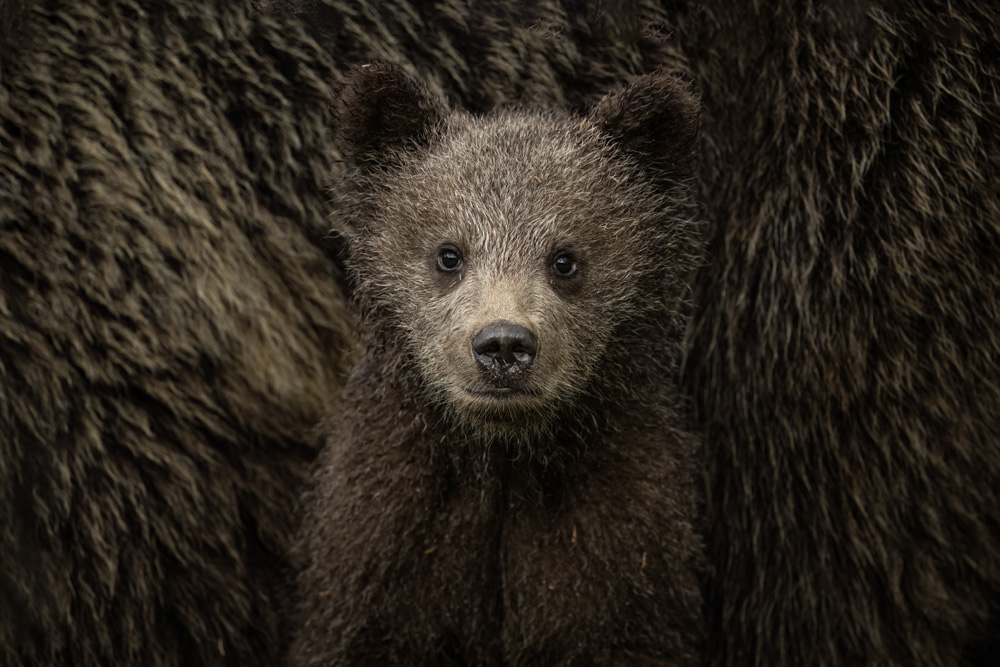
- Females with cubs
- Bears swimming and foraging
- Territorial interactions
- Seasonal behaviour linked to breeding and feeding
The area is also known for occasional sightings of wolverines, wolves, white-tailed eagles and black kites, adding further excitement to every hide session.
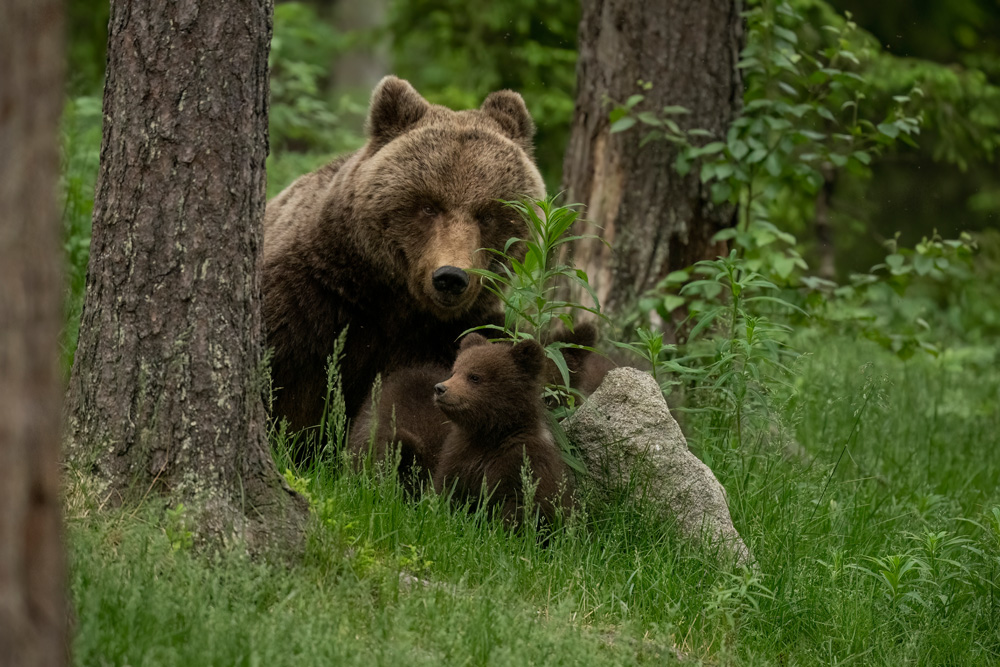
Why Martinselkonen Is So Good for Bear Photography
A major reason for Martinselkonen’s popularity is its dedicated photography infrastructure.
The centre operates specialist photography hides positioned in a range of environments including forests, ponds and marshland. These hides are specifically designed with photographers in mind, providing multiple shooting ports and carefully selected viewing angles.
Depending on the location, photographers can create images featuring:
- Forest backgrounds
- Reflections in still water
- Bears walking through wetlands
- Atmospheric mist
- Spring snow scenes
- Midnight light
This variety allows photographers to return repeatedly without producing the same portfolio images.
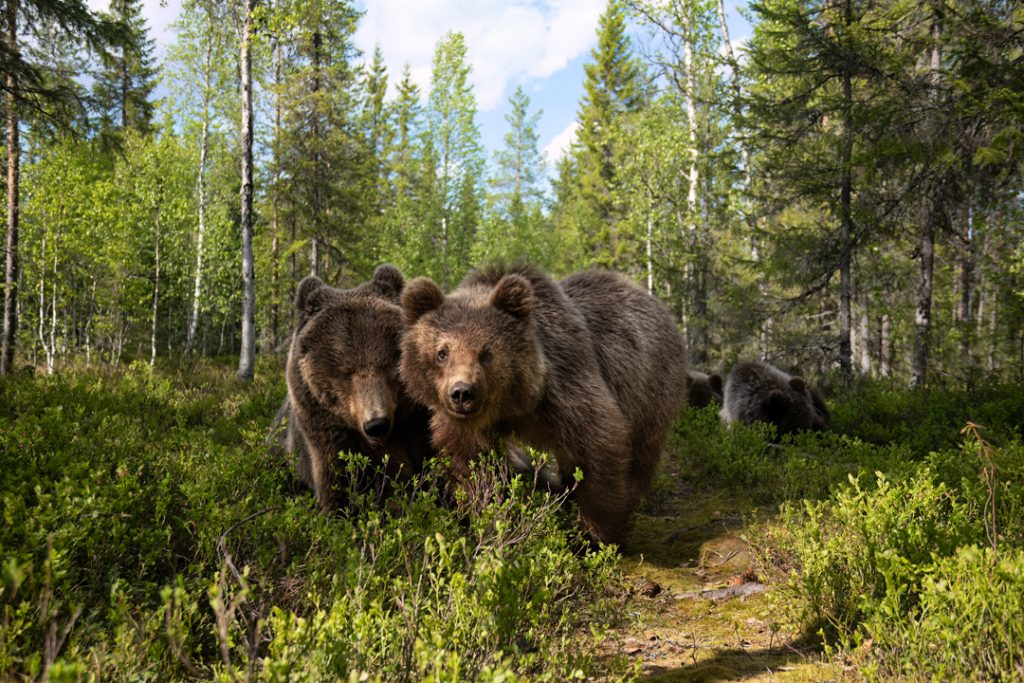
Boreal Wildlife Centre: Photographing the Finnish Taiga
Located in the Viiksimo area of Kuhmo, the Boreal Wildlife Centre offers a complementary experience focused on the rich biodiversity of the Finnish taiga.
The centre is operated by a team of experienced naturalists and specializes in wildlife observation and photography throughout the year. The region has been used for large carnivore photography for more than three decades and is particularly renowned for its opportunities to photograph bears and wolverines.
The landscape around Boreal Wildlife Centre consists of:
- Scots pine forest
- Spruce woodland
- Birch groves
- Lakes and rivers
- Peat bogs and wetlands
These habitats create ideal conditions for wildlife and provide photographers with authentic northern wilderness scenery.
For many visitors, the appeal of Boreal Wildlife Centre extends beyond bear photography alone. The possibility of photographing wolverines and occasionally wolves makes it a highly attractive destination for serious wildlife photographers seeking portfolio diversity.
Different times to Photograph Brown Bears in Finland
April: Bears Against Snow
As bears emerge from hibernation, snow often remains on the ground.
This creates rare opportunities to photograph dark-coated brown bears against brilliant white backdrops, producing images that are uniquely Scandinavian in character.
Best For:
- Snow scenes
- Fresh spring coats
- Minimal vegetation
- Dramatic contrast
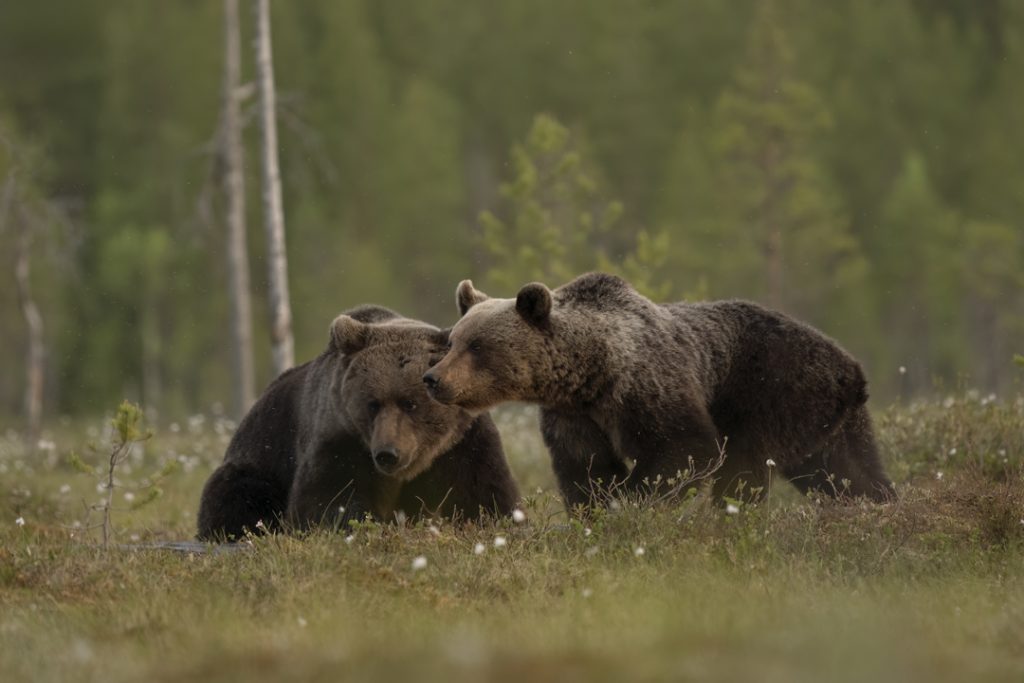
May: The Rutting Season
Spring transitions into the breeding season, and bear activity increases significantly.
Male bears become more territorial, sometimes resulting in displays of dominance and occasional confrontations that can produce dramatic action photography.
Best For:
- Behavioural photography
- Bear interactions
- Action images
- Territorial displays
June: Prime Time for Bear Photography
June is widely considered the finest month for bear photography in Finland.
The extraordinary northern light means darkness barely arrives, allowing photographers to shoot throughout the night without extreme ISO settings. Bears are highly active, and mothers with cubs are often seen during this period.
Best For:
- Cubs
- Long golden light
- Extended shooting opportunities
- High bear activity
July and August: Water and Atmosphere
As summer progresses, bears frequently visit ponds and wetland areas.
July can offer opportunities to photograph swimming bears, while August often produces atmospheric mist and beautiful reflections around water-based hides.
Best For:
- Reflections
- Misty landscapes
- Swimming bears
- Moody environmental portraits
Essential Techniques for Photographing Bears from a Finnish Hide
Success in Finland is rarely about finding the bears.
The bears usually arrive.
The challenge is being prepared to make the most of the opportunity when they do.
1. Arrive with a Clear Plan
Hide photography differs hugely from traditional wildlife photography. Once inside, you’ll often remain in position for 12 hours or more.
Consider beforehand:
- Which lens will be your primary setup
- Research what images are possible
- Look at specific images that are possible when you get to the hides – consider backgrounds and light
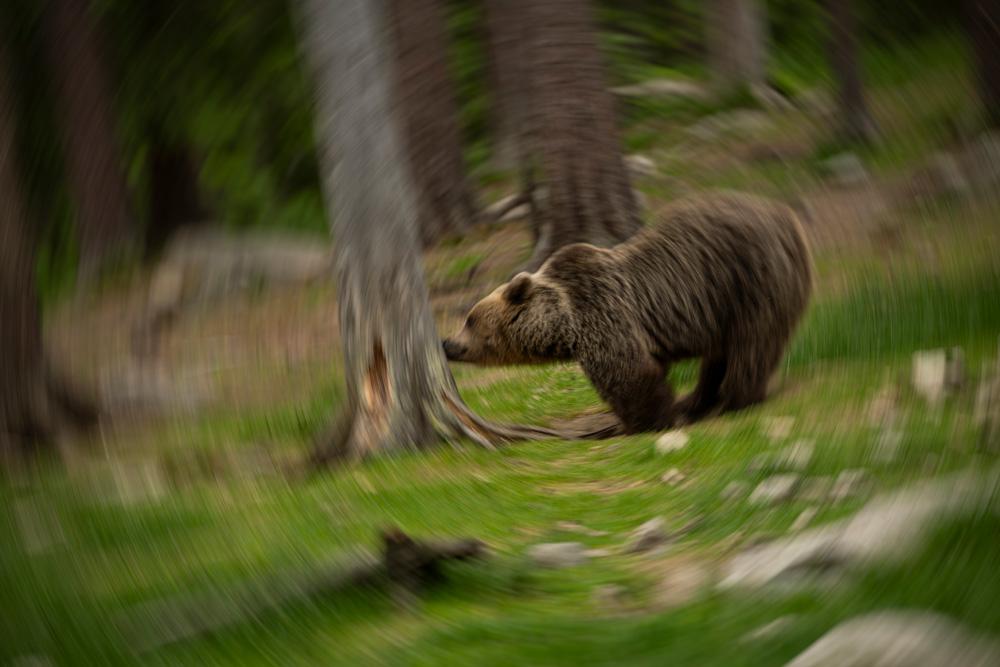
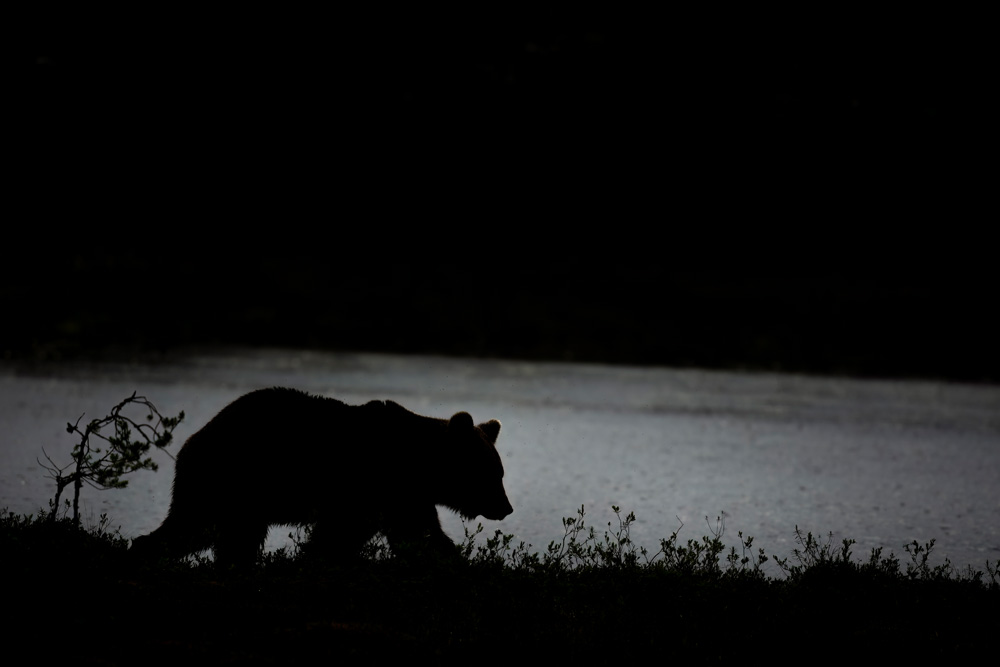
- Don’t be scared to try different techniques – consider high key, low key, zoom bursts, ICM, Panning etc
- How you’ll handle changing light conditions
Constantly changing gear often leads to missed opportunities.
I always speak to my clients about trying to tell the bears story and to try and come home with a full portfolio of bear images. This portfolio should show the environment and should feature close up portraits, behaviour and creativity. I include creativity because it is so easy to just take loads of images that are identical. This is often an issue shooting from hides so get some safe shots – well exposed and sharp images and then experiment with techniques, light etc.
2. Use a Bean Bag or Gimbal
Most people will use a Gimbal tripod head – the majority of hides have plates to screw these in to or they use a beanbag.
Benefits include:
- Improved stability
- Faster repositioning
- Less noise
- Greater comfort
- Better suitability for low hide windows
Since space is limited inside many photography hides, both are useful options. I usually put a larger lens on a gimbal at one of the hide openings and use a smaller lens on a second camera body that I can easily move around the hide with.
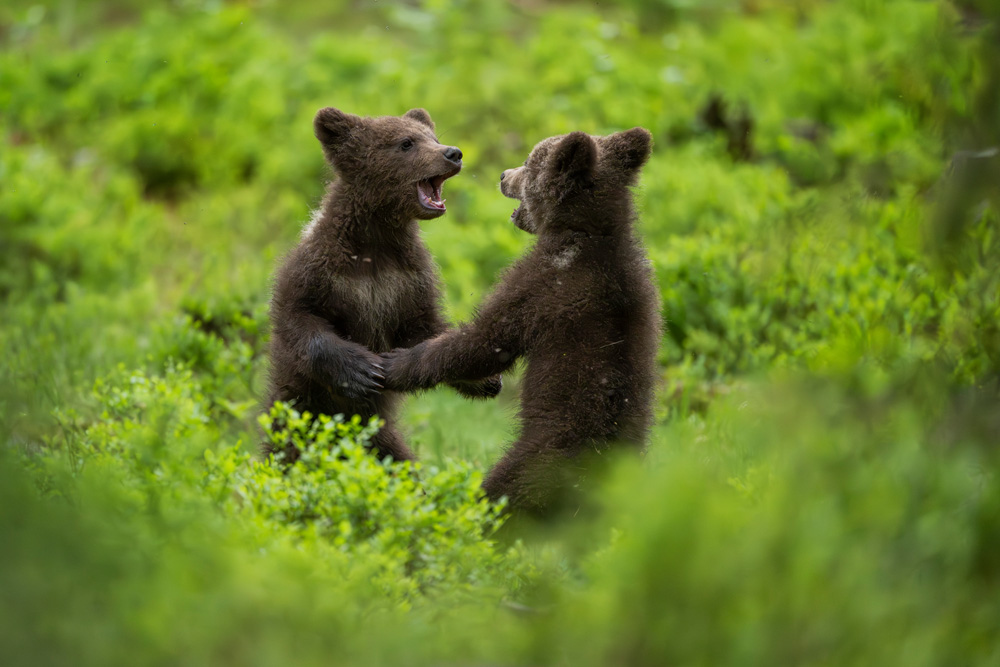
3. Focus on Behaviour, Not Just Portraits
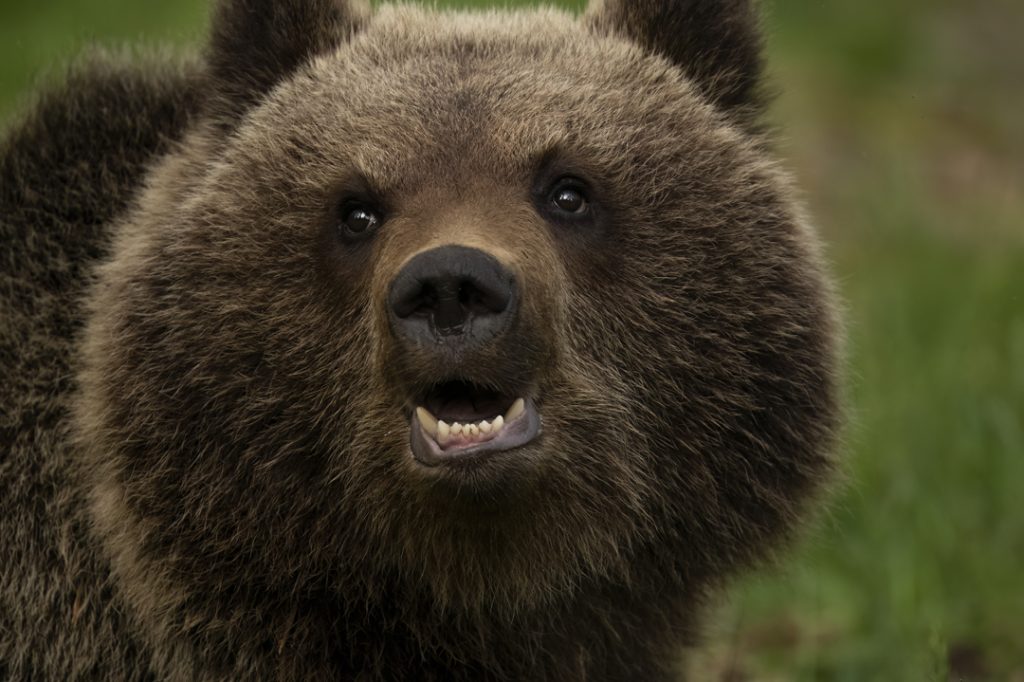
Sharp headshots are easy.
Memorable wildlife photographs tell stories.
Watch for:
- Bears scent-marking
- Interactions between individuals
- Mothers with cubs
- Swimming behaviour
- Feeding sequences
- Eye contact and expressions
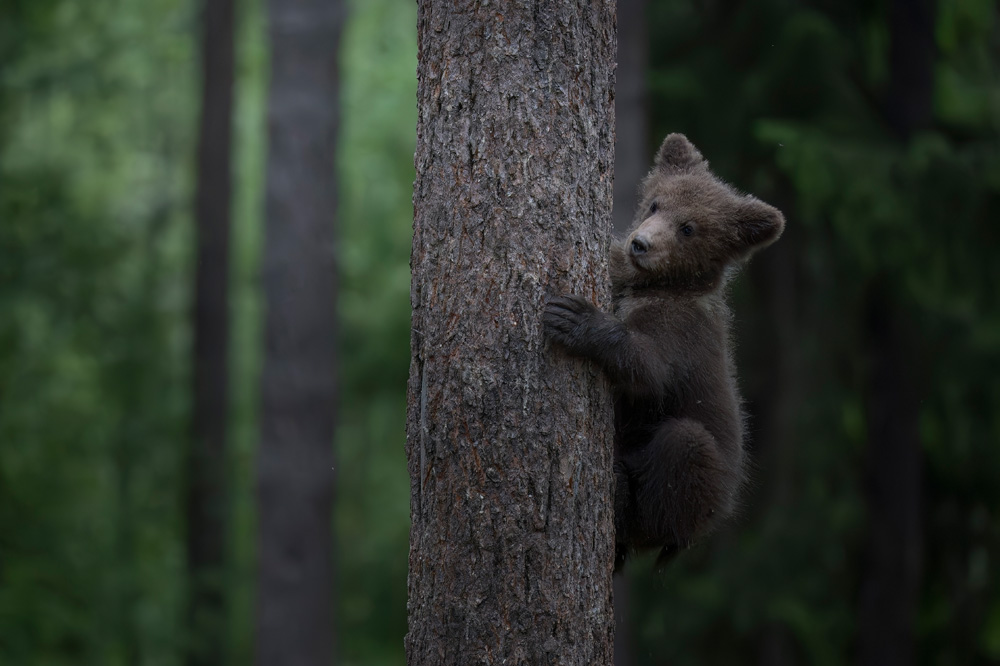
- Tree Climbing
Behavioural images often have far greater impact than simple portraits.
4. Keep Noise to a minimum
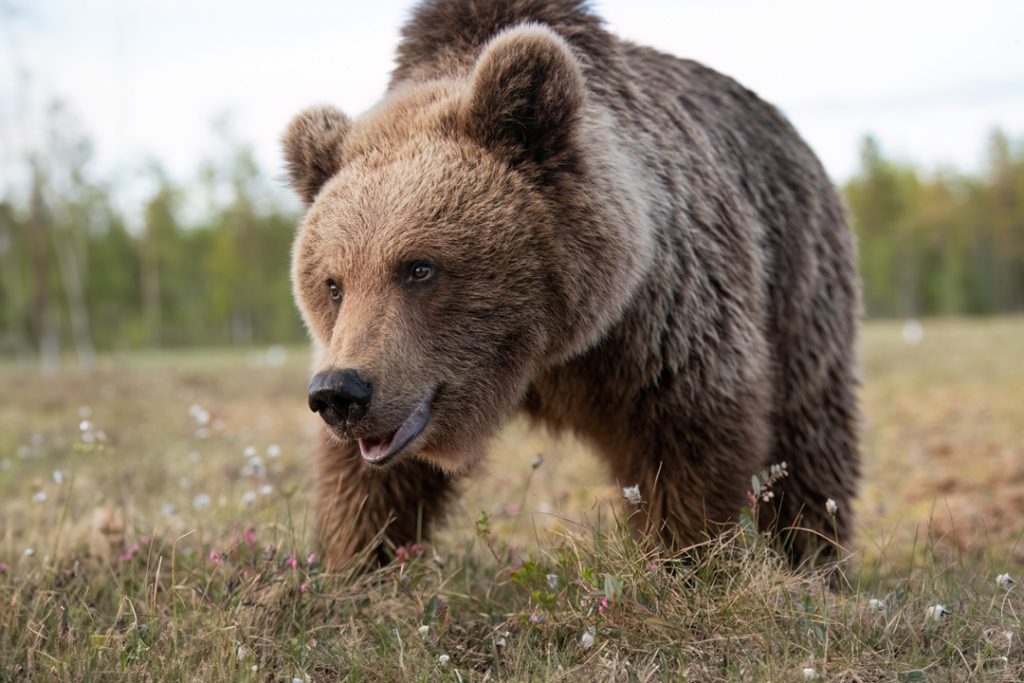
Finnish photography hides are designed to minimise disturbance.
Help maintain that advantage by:
- If using mirrorless set to low volume or silent. If using a DSLR set on quiet and shoot on a lower burst mode.
- Moving slowly and deliberately
- Avoiding sudden movements near viewing ports
- Do not talk in loud voices – use low voices and whispers.
Large bears are surprisingly aware of unnatural movement.
5. Make the Most of Finland’s Exceptional Light
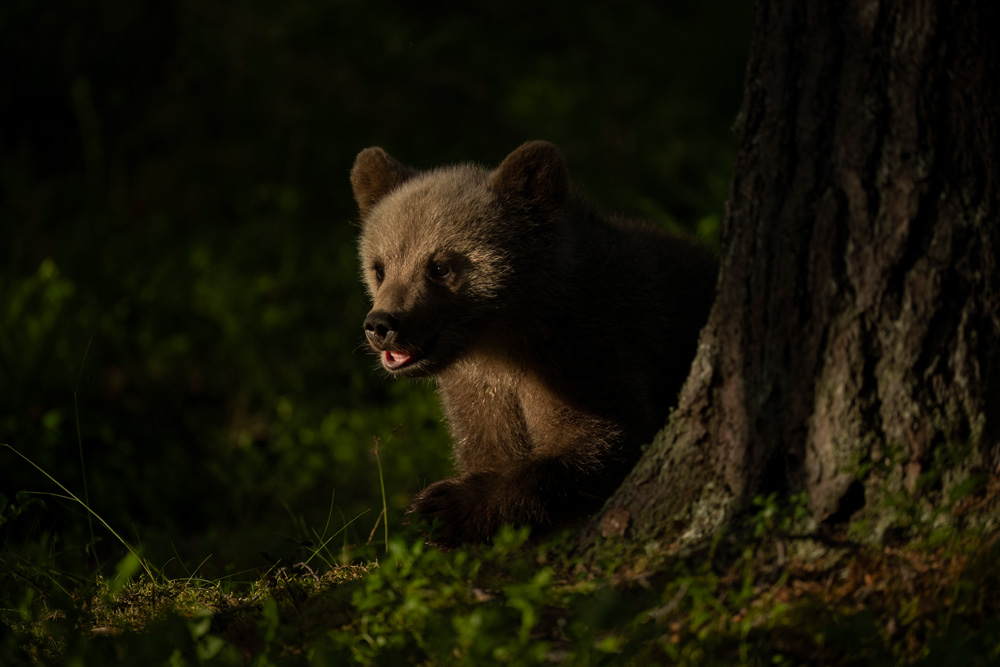
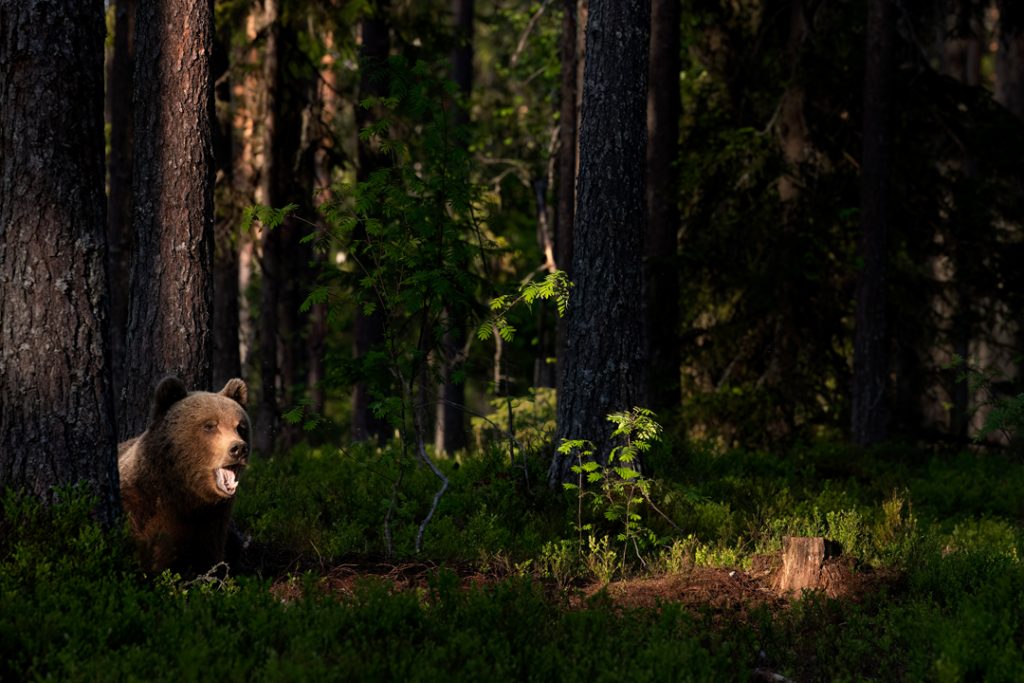
One of the greatest advantages of photographing bears in Finland is the extraordinary quality of summer light.
During June, photographers can work throughout the night under soft illumination.
This creates opportunities for:
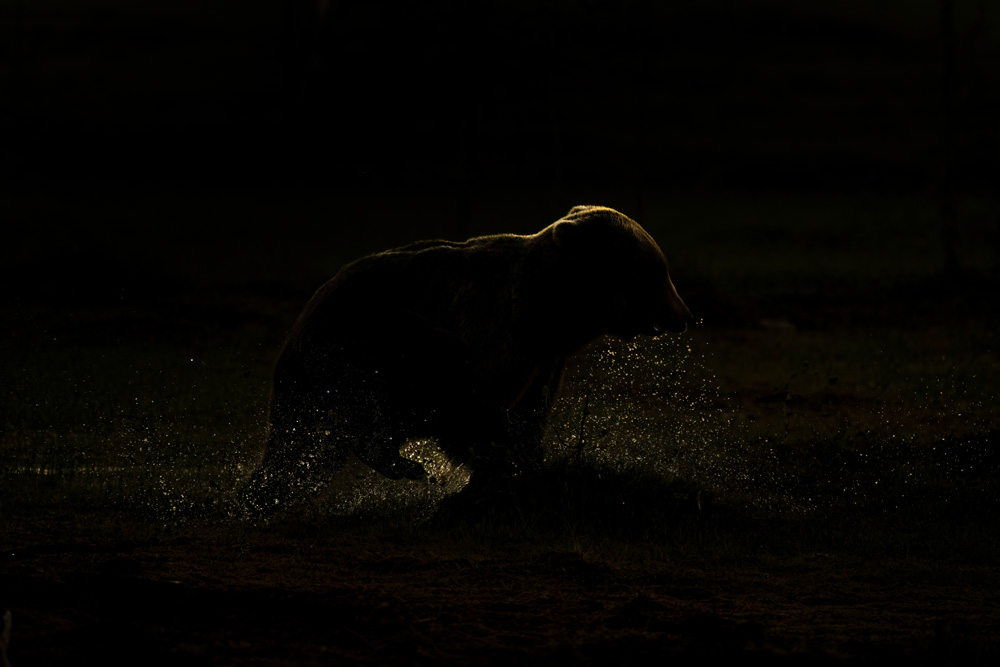
- Golden rim lighting
- Soft shadow detail
- Beautiful catchlights
- Natural colour saturation
- Dappled Sunlight penetrating the forest
- Golden morning light in the swamps.
Patience during these lighting transitions often produces the strongest images of an entire trip.
6. Don’t Forget Environmental Images
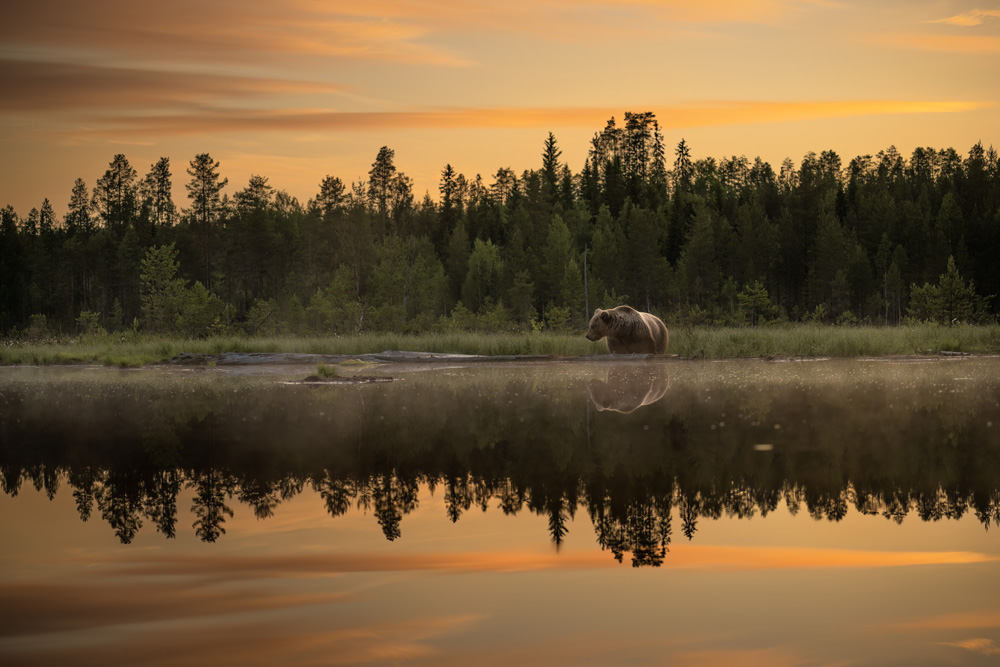
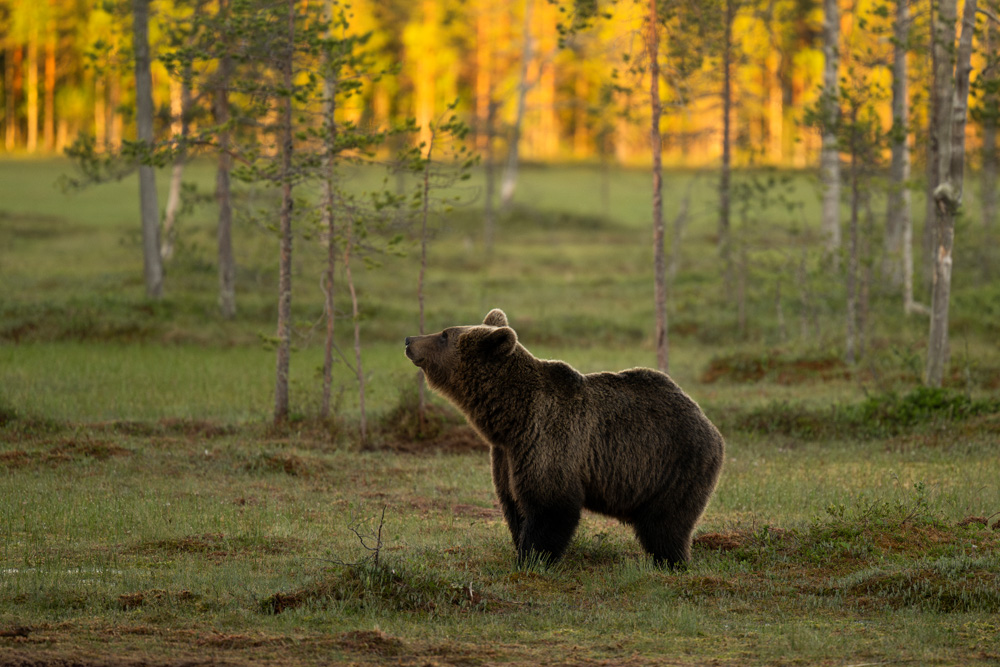
Long lenses dominate wildlife photography, but the best portfolio often includes wider shots.
Try using:
- 70-200mm lenses
- 100-400mm zooms
- Moderate telephoto focal lengths
Environmental portraits help tell the story of the Finnish taiga and place the bear within its habitat
7. Be Prepared for Sudden Action
Although bears often move slowly, behaviour can change instantly.
Keep your settings ready for:
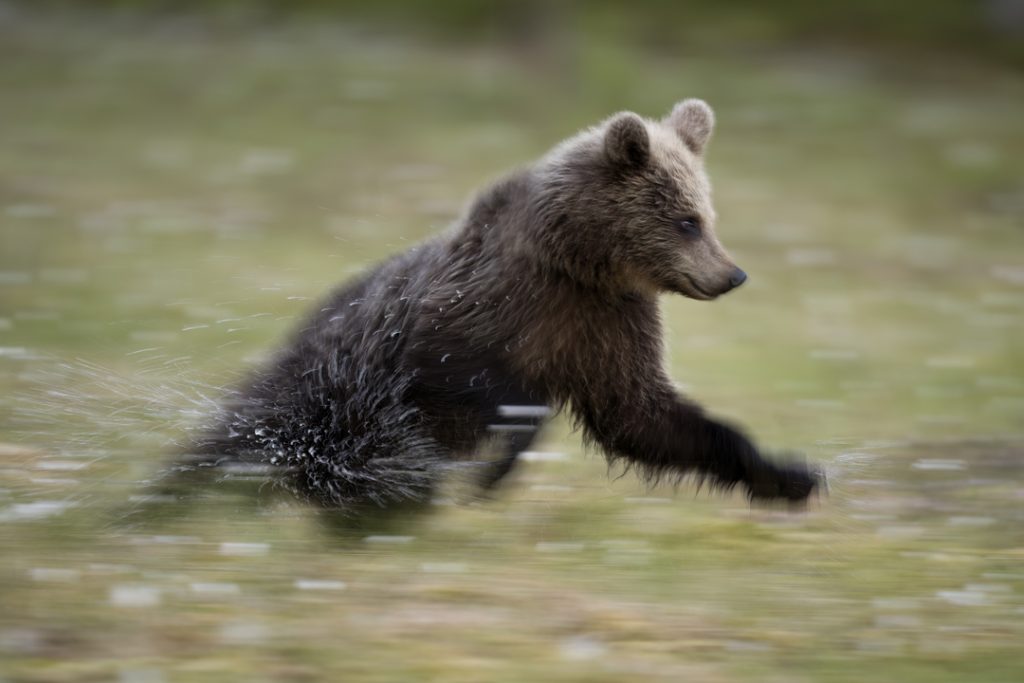
- Running individuals
- Territorial disputes
- Playful cubs
- Swimming behaviour
- Tree Climbing
A shutter speed of 1/1000 second or faster is often useful when photographing action. This is the default shutter speed that I always try to stay at and I will only lower this when the light drops or when I am doing slow shutter speed techniques.
8. Use Weather Creatively
Many photographers hope for sunshine.
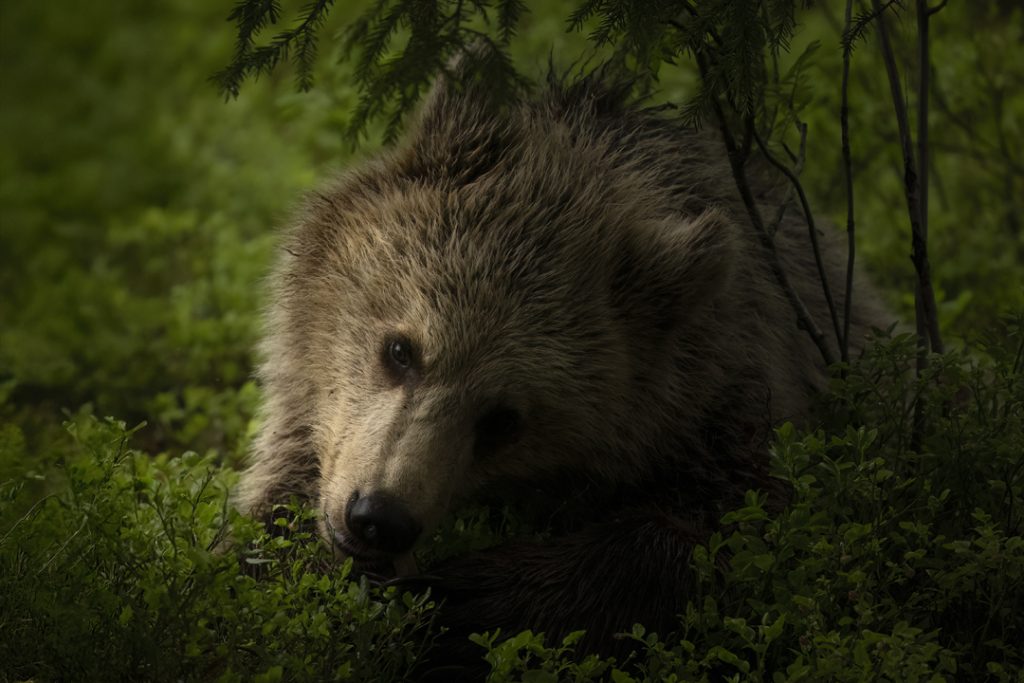
However, some of Finland’s most atmospheric bear images are made during:
- Rain
- Mist
- Low cloud
- Early morning fog
- Snowfall
August, in particular, can produce beautiful misty conditions around ponds and wetlands.
9. Stay Alert Until the End
Many photographers relax as dawn approaches.
This can be a mistake.
Some of the best sightings occur in the final hour before leaving the hide, particularly when changing light conditions create unique photographic opportunities.
You usually exit the hide at between 7am and 8am so it is a good idea if you do decide to sleep that you set an alarm a few hours before to make the most of the dawn light.
10. Practice Patience
Ultimately, the most important technique is patience.
A typical Finnish bear hide session involves long periods of waiting punctuated by brief moments of magic.
Whether it’s a huge dominant male emerging from the forest, a mother leading her cubs through a clearing, or a bear walking through mist beside a woodland pond, the reward often arrives when patience is at its greatest.
If you are in a photography hide on your own, it does pay to try and stay awake throughout the night. I usually aim to sleep between 11pm and 2am as that is when the light does drop. You can still shoot but the ISO tends to be higher. A tip can be to set an alarm for every half hour or every hour and then you can get a bit of sleep and then wake up and check for bears or what the light is like.
If in a shared hide so a rota system from around 10pm where you rotate who is asleep and who is watching and the person watching can wake up the others if something arrives.
Recommended Camera Equipment for Bear Photography in Finland
Camera Bodies
- Fast autofocus mirrorless camera
- DSLR with strong low-light performance
- Bridge Camera – although they tend to struggle when the light drops at around 11pm.
- Dual card slots recommended
Lenses
- 100-500mm zoom
- 200-600mm zoom
- 300mm, 400mm, 500mm or 600mm prime
- 70-200mm for environmental images
Accessories
- Bean bag
- Spare batteries
- Memory cards
- Lens cloths
- Warm outdoor clothing – dress in layers. The hides can be very cold or very warm. Sometimes on consecutive nights.
- Mosquito net hats – trust me you will be thankful.
Ethical Bear Photography in Finland
One of the key reasons Finland has become such a respected wildlife photography destination is its commitment to ethical wildlife observation.
Purpose-built hides at both Martinselkonen and Boreal Wildlife Centre allow photographers to observe wildlife while minimizing disturbance. This enables bears to behave naturally and helps create authentic images that reflect genuine wild behaviour.
The best wildlife photography is not only about creating beautiful images—it is about doing so responsibly.
Final Thoughts
If you’re searching for the best brown bear photography destination in Europe, Finland deserves a place at the very top of your list.
The combination of vast taiga wilderness, reliable sightings, professional photography hides and extraordinary northern light creates opportunities that few locations can match.
Martinselkonen Wilds Centre offers one of Europe’s finest bear photography experiences, with dedicated hides, varied habitats and decades of expertise.
Boreal Wildlife Centre complements this with access to exceptional taiga habitats and the possibility of photographing bears, wolverines and other northern wildlife in one of Finland’s most biodiverse wilderness regions.
For wildlife photographers seeking dramatic encounters, portfolio-worthy images and an authentic wilderness experience, photographing brown bears in Finland is an adventure that should be experienced at least once in a lifetime.
I run tours to Finland in June every year to both of these locations. My focus is guiding you to ensure that you come home with a unique portfolio of brown bears. I try to encourage you to step out of your comfort zone and try different techniques so that you come home with a full and varied portfolio to be proud of.
If you would like to join me on one of my photographic tours then you can read more here or contact me with any questions.