
Photographing Puffins on the Isle of May: The Ultimate Wildlife Photography Guide
Discover how to capture stunning puffin photos on Scotland’s Isle of May with expert tips on timing, camera settings, and composition.
Why Photograph Puffins on the Isle of May?
The Isle of May, located in the Firth of Forth just five miles off the Fife coast, is one of Scotland’s premier wildlife photography destinations.
Each spring and summer, the island becomes home to tens of thousands of puffins, along with hundreds of thousands of other seabirds.
For photographers, this location stands out because:
- Puffins are relatively approachable and tolerant of people
- You can photograph them at close range from designated paths
- There are abundant opportunities to capture natural behaviour
Whether you’re a beginner or experienced wildlife photographer, the Isle of May offers a rare combination of accessibility and wild beauty.

Best Time to Photograph Puffins in Scotland
Timing is critical when planning your puffin photography trip.
- Season: Late April to early August
- Peak activity: May and June
- Best month for photography
- April/Early May – arrival. Good for nest maintenance and mutual grooming
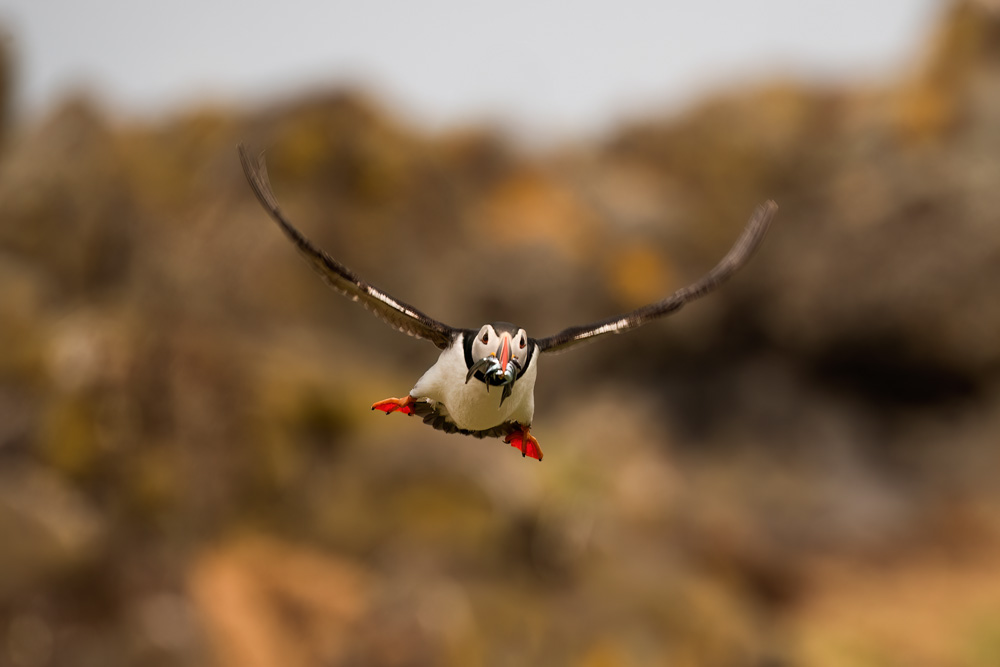
- End of May/June – prime time for puffling feeding. Best for puffins with fish.
- July – quieter but until mid July still lots of puffins. Best time to catch a glimpse of a puffling outside its burrow and still good for puffins with fish.
During peak season, puffins are highly active – flying between sea and burrow, often carrying fish to feed their chicks.
This is the ideal time to capture:
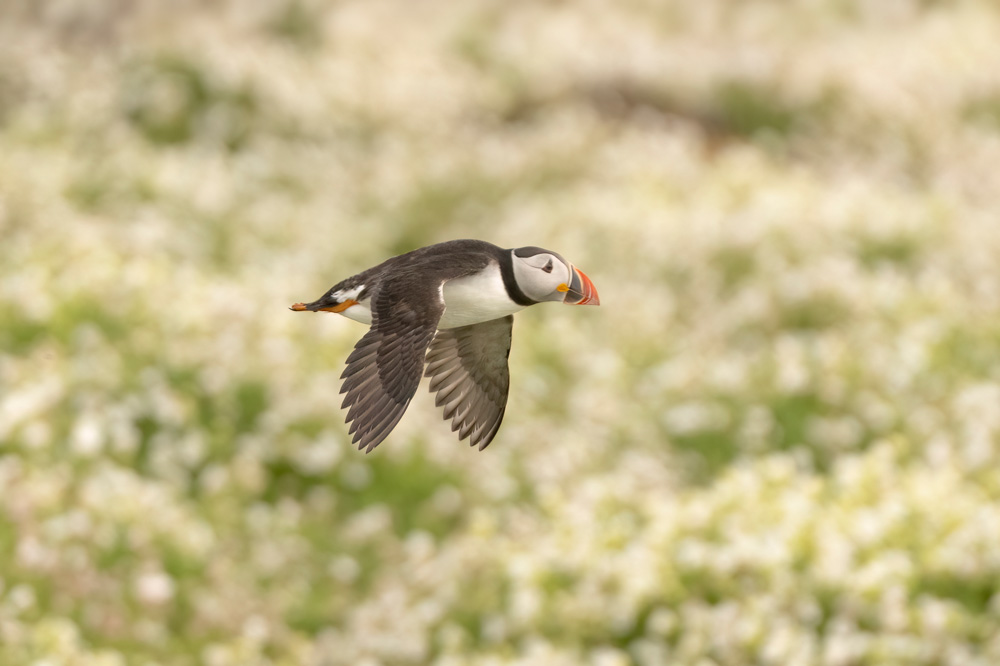
- Puffins in flight
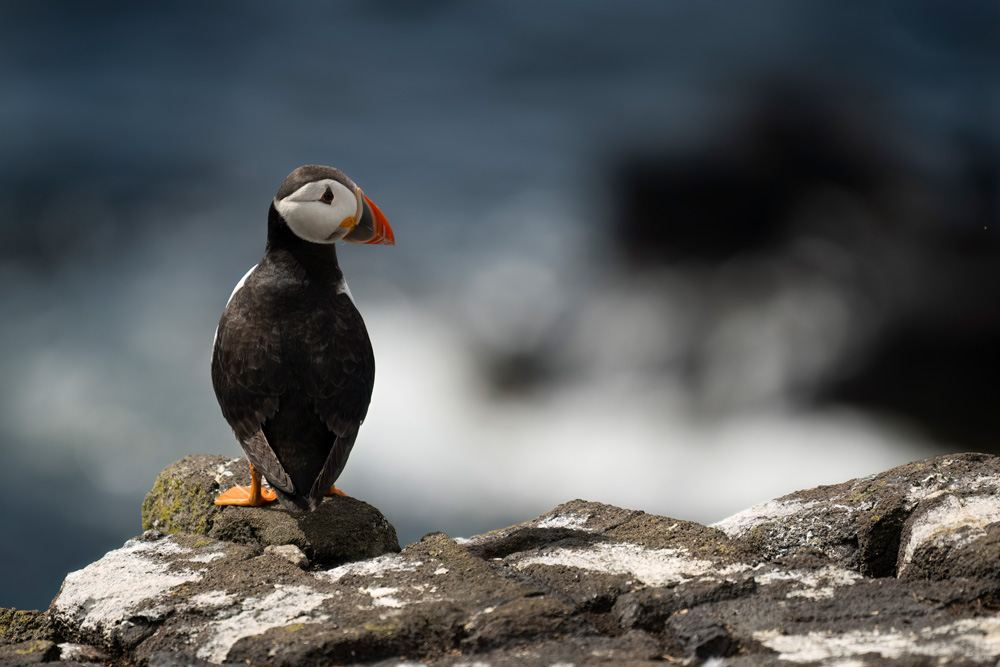
- Close-up portraits
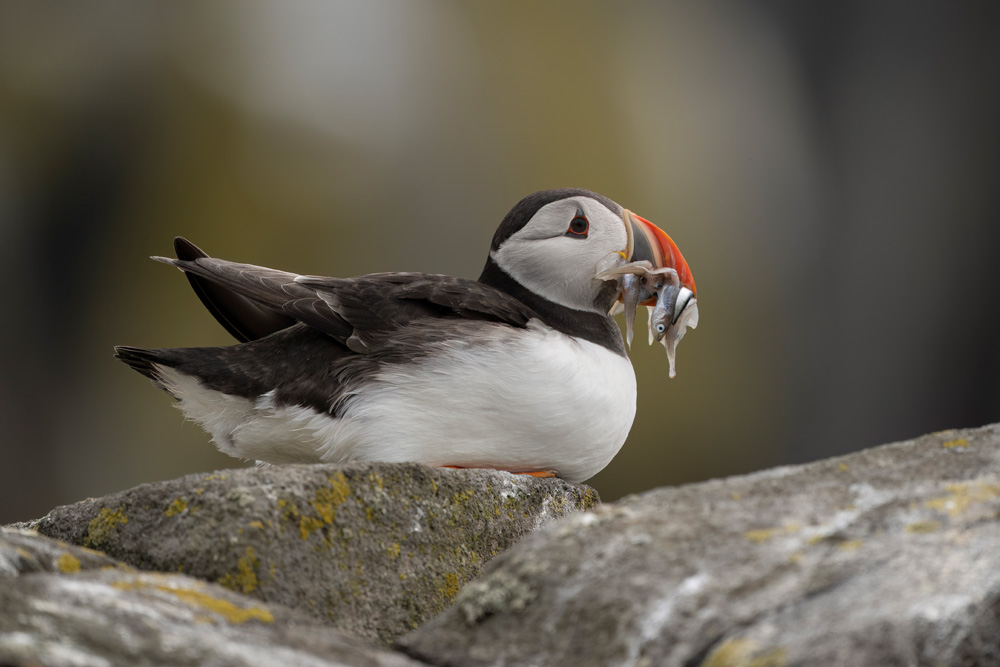
- Birds carrying multiple sand eels
How to Get to the Isle of May
Access to the island is by boat trip from Anstruther or North Berwick, with most trips running between spring and early autumn.
Typical trips last several hours and include:
- A short boat crossing
- Around 2–3 hours on the island
Tip for photographers:
Book a landing trip, not just a sightseeing cruise, so you can walk among the puffins. I always use Anstruther Pleasure Cruises who are reliable and extremely good at getting you out to the island. Book early in the year to avoid disappointment as they are booked up months in advance.

Camera Gear for Puffin Photography
To capture stunning puffin images, bring:
- Telephoto lens (100–500mm) – ideal for portraits and action
- Fast autofocus camera – essential for tracking birds in flight
- Burst mode (continuous shooting) – for capturing movement
You don’t need professional gear, but a zoom lens dramatically improves your flexibility. To be honest if you know your camera well then you will get good images no matter what equipment you have.
Best Camera Settings for Puffins
Use these as a starting point:
- Shutter speed: Fast (to freeze motion)
- Focus mode: Continuous autofocus (AI Servo / AF-C)
- Exposure adjustment: Slight underexposure for bright plumage
Puffins are fast-moving, especially in flight, so quick reactions and fast settings are key.
Tip for new photographers – select the right mode for your camera:
Shutter Priority Mode
If you have an older camera set it to Shutter Priority Mode and select 1/1000s and select Auto ISO. Then underexpose by one full stop as standard (-1) on the exposure compensation. The camera will set the aperture and ISO but you will still have creative control over how the image looks by using exposure compensation
Aperture Priority Mode
If your camera allows you to set a minimum shutter speed in Auto ISO then choose Aperture Priority Mode. Set the minimum shutter speed as 1/1000s. Then select the widest aperture. Then select Auto ISO. Then underexpose by one full stop as standard (-1) on the exposure compensation. The camera will set ISO at the lowest value to always give you 1/1000s with the chosen aperture, but you will still have creative control over how the image looks by using exposure compensation. Read more here.
Manual with Auto ISO
If you have a newer camera then shoot in manual with Auto ISO. Select 1/1000s as a shutter speed and choose the widest aperture (lowest number) Then select Auto ISO. Then underexpose by one full stop as standard (-1) on the exposure compensation. The camera will set ISO at the lowest value to give you your chosen exposure, but you will still have creative control over how the image looks by using exposure compensation.
- For puffins in flight with no wing blur then shoot at 1/2000s or higher.
- For more than one puffin in focus in a group select a smaller aperture (higher number)
- If images look too bright select a faster shutter speed and reduce the exposure compensation further.
If you have never used exposure compensation before then read this blog post here

Puffin Photography Tips for Better Images
- Get to Eye Level
Shooting low creates stronger, more intimate images and helps isolate the subject. The Isle of May has some spectacular yellow rocks which look incredible from a low angle.

- Focus on Behaviour
Look for moments like:
- Landing sequences
- Birds returning with fish
- Interactions between puffins
These storytelling images stand out more than static portraits.

- Use Natural Light
Soft light (morning and late afternoon) produces:
- Better colour
- Less harsh contrast
- More pleasing backgrounds
Backlighting can even make the puffin’s beak glow. This is hard to do on the Isle of May as the trips don’t often run in the times that are optimal for light, but all of the above are applicable in some way. It is actually better to visit on a day that is overcast rather than a bright sunny day.

- Simplify Your Background
Use shallow depth of field (wide aperture – lowest number) to blur grass or cliffs behind your subject for a clean, professional look. Also pay attention to colours and tones in the background and try and use these to create interest on your subject.

- Dare to be different
Once you have some “safe shots” try something different:
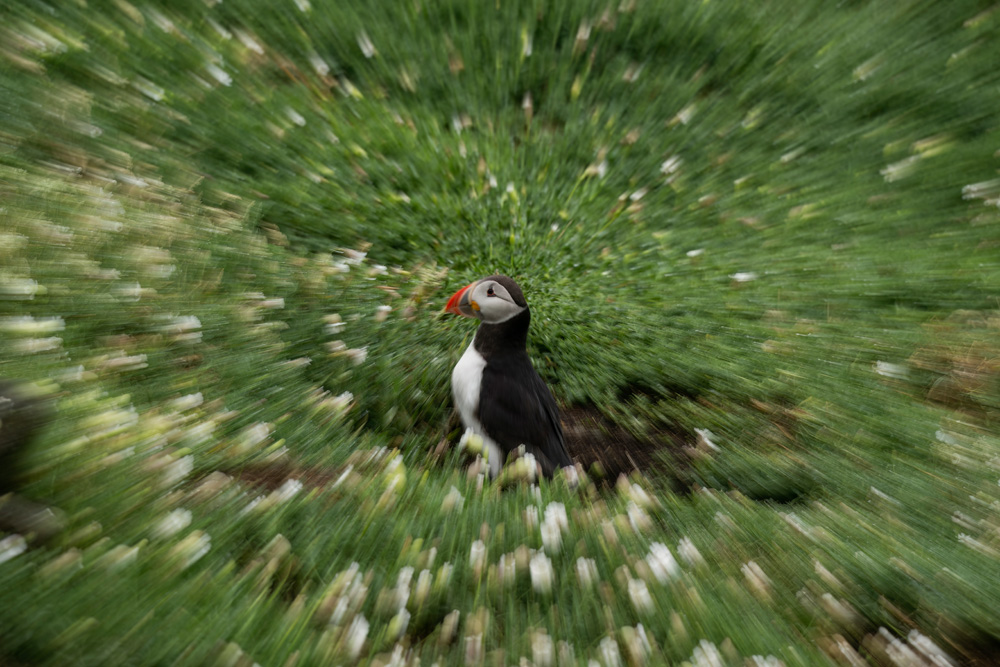
- Zoom bursts – puffins are great subjects to do this technique with. Read more here.
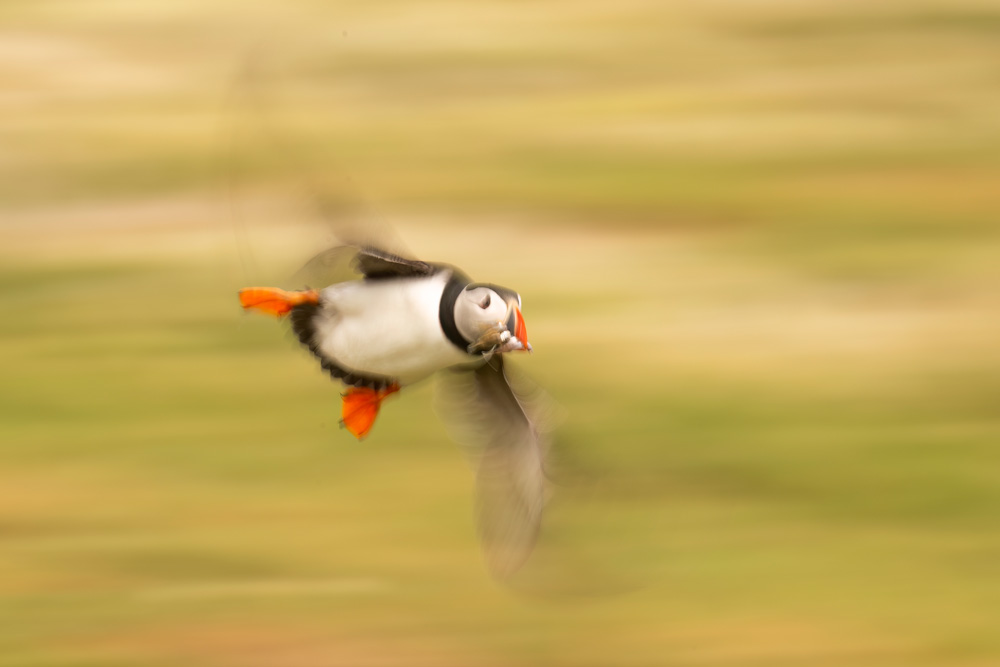
- Panning – try a slow shutter speed on the puffins as they fly past you.
- Underexpose further – try some low-key images of the birds lit by the sun with a shadowy background.
- Overexpose – try some high-key images of the birds against bright water where the sun is hitting the background.
If you would like to learn more about some of these techniques have a read of these blog posts: Zoom Bursts and Panning
6. Don’t forget the other species
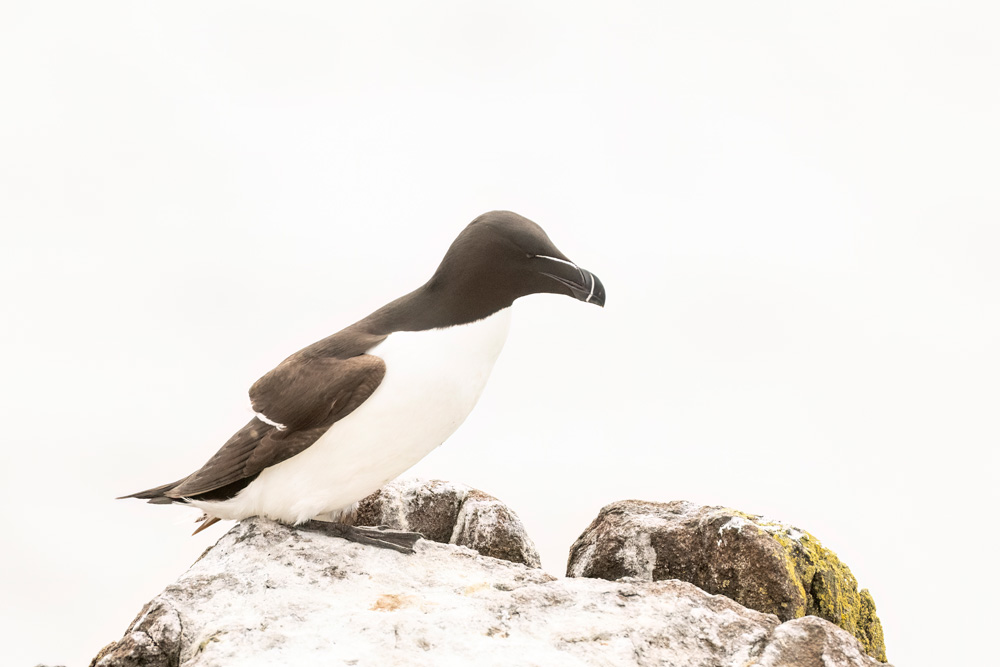
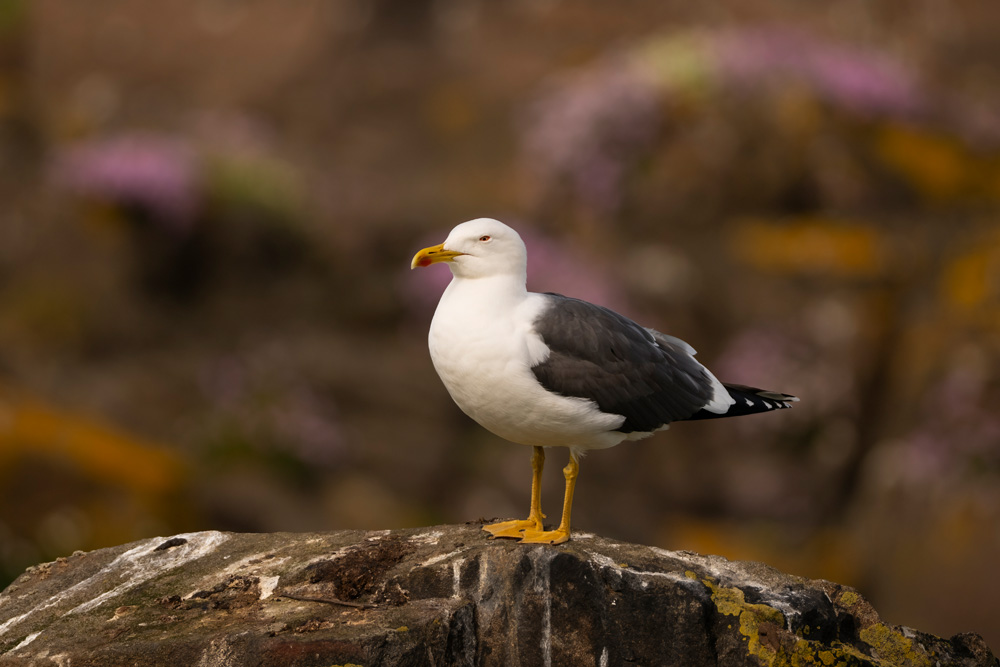
As much as puffins are the “star species” there are often many other species that make up an impressive supporting cast. These can include Guillemots, Razorbills, Shags, Gulls and Kittiwakes. They are all unique and interesting species and can add value to your puffin portfolio to help tell the story of what else lives on the Isle of May.
Wildlife Photography Ethics on the Isle of May
The Isle of May is a protected National Nature Reserve, so it’s essential to photograph responsibly:
- Stay on designated paths
- Do not disturb nesting birds
- Avoid blocking puffins moving to their burrows
Respecting wildlife ensures this incredible location remains accessible for future generations.
What Makes Puffin Photography So Special?
Puffins are one of the UK’s most charismatic birds:
- Bright, colourful beaks
- Comical expressions
- Unique behaviours
Combined with the dramatic coastal scenery of the Isle of May, they provide endless creative opportunities for photographers.

Final Thoughts: Capturing Puffins on the Isle of May
Photographing puffins on the Isle of May is an unforgettable experience. With the right timing, preparation, and technique, you can capture:
- Close-up portraits
- Dynamic flight shots
- Unique behavioural moments
The combination of accessible wildlife, stunning scenery, and high photographic potential makes this one of the best puffin photography locations in Scotland.
If you are planning a trip to the Isle of May and have any questions before you go then get in touch
If you would like to experience a Wildlife Photography Workshop on the Isle of May where I will teach you how to capture different and eye catching images of puffins then check out my Isle of May Puffin Workshop here.